

Views: 0 Author: Site Editor Publish Time: 2026-08-28 Origin: Site


A pocket door is only as reliable as the hardware it runs on. Poorly adjusted components inevitably lead to harsh scraping. Low-quality rollers cause frustrating derailing issues. These mechanical failures eventually force costly drywall repairs. Framing and adjusting these hidden doors is not just a standard weekend project. You must view it as a critical evaluation of component quality. Building a moving system inside a wall leaves no room for sloppy work. We created this comprehensive guide to help you master the internal mechanics. You will learn how to install, tune, and evaluate every vital piece correctly. Following our step-by-step approach ensures your doors deliver smooth, long-term operation. You can completely avoid tearing open your finished walls later. Your upfront effort guarantees a silent, perfectly aligned glide every time.
Track Leveling is Non-Negotiable: Even a 1/8-inch slope in the header can cause the door to roll open or closed autonomously.
Hanger Quality Dictates Lifespan: Upgrading to ball-bearing nylon rollers prevents the metal-on-metal wear that degrades standard pocket door hardware.
Adjustments Require Patience, Not Force: Stripping the hanger pin nuts during height adjustment is a common point of failure; use the manufacturer-provided offset wrench.
Bottom Guides Prevent Frame Damage: Proper installation of the bottom guide prevents lateral sway, which causes door scraping and track twisting.
Builder-grade hardware often relies on lightweight aluminum tracks. Manufacturers typically pair these flimsy tracks with cheap plastic friction rollers. These basic setups almost always fail under the weight of heavy solid-core doors. You must evaluate the track and hangers carefully before you begin framing. Upgrading your pocket door hardware is the smartest investment you can make during construction.
Here is a detailed breakdown of component evaluation criteria to guide your purchase.
Component Type | Standard Grade | Heavy-Duty Commercial Grade |
|---|---|---|
Track Design | Open J-track (prone to jumping) | Enclosed Box track (jump-proof) |
Roller Material | Hard plastic wheels | Nylon wheels over steel ball bearings |
Weight Capacity | Under 100 pounds | 150 to 250+ pounds |
Metal Thickness | Thin rolled aluminum | Thick extruded aluminum |
The track design dictates overall operational stability. J-tracks feature a simple exposed lip. This open design makes them highly prone to jumping during fast operation. Enclosed Box tracks utilize a superior jump-proof design. The rollers sit entirely inside a captured metal channel. Make enclosed tracks your primary buying consideration.
Next, you must evaluate the hangers closely. Standard plastic wheels typically max out at a 100-pound load limit. They create high friction and wear down quickly. Contrast these basic wheels with three-wheel tri-roller nylon ball bearings. High-quality nylon bearings handle 150 to 250 pounds effortlessly. They glide silently and resist structural deformation over time.
Validating hardware weight capacity against actual door weight remains critical. A solid wood door easily weighs over 130 pounds. You must perform this weight check before closing the drywall. Once the drywall goes up, correcting weak hardware requires messy demolition. Never install a hollow-core door kit for a solid wood slab.
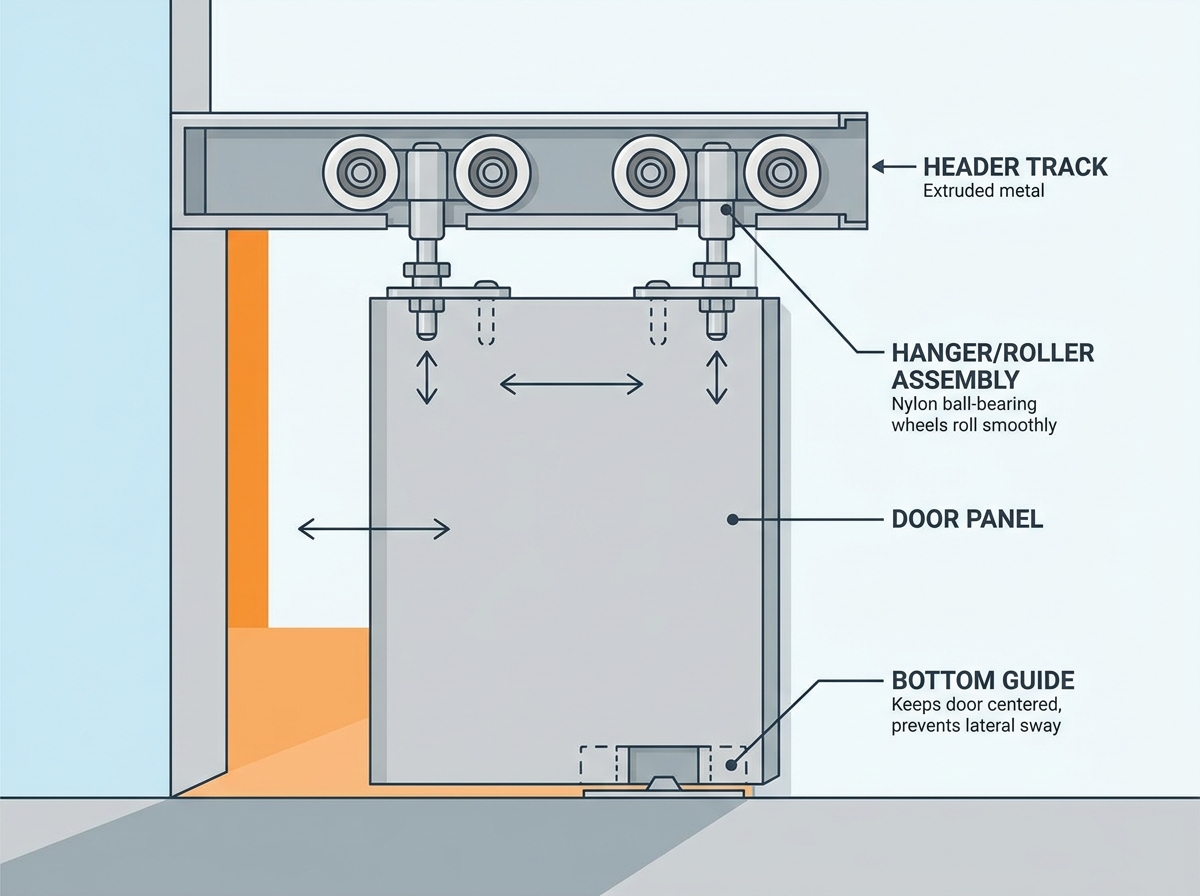
Successful installation requires strict adherence to structural prerequisites. The rough wall opening must be perfectly plumb. The structural header must be absolutely level and square. If the framing leans even slightly, gravity takes over immediately. The door will stubbornly refuse to stay open or closed. You will fight the door constantly.
You must gather specific, non-negotiable tools before starting the project. Do not attempt this job without the right diagnostic equipment.
High-precision laser level or a 6-foot aluminum box level
Specialized flat offset pocket door adjustment wrench
Power drill and impact driver
Reliable magnetic or electronic stud finder
Fine-tooth hacksaw for cutting aluminum track
Wall preparation carries hidden implementation risks. The final wall-finishing phase often destroys perfectly good installations. You must be incredibly careful regarding drywall screw lengths. Using overly long screws over the pocket cavity is disastrous. Screws penetrating the pocket frame will scratch the door paint deeply. They might even physically block the door path entirely.
We strongly recommend using 1-inch or 1-1/4-inch screws exclusively. Only use these short screws across the hollow pocket framing section. Communicate this strict requirement clearly to your drywall crew. Check the inside cavity with a flashlight before hanging the door.
Installing the track and hangers requires precision and cleanliness. Follow these mechanical steps methodically to avoid operational failures down the road.
Unless you buy a pre-sized knockdown kit, you must cut the track to size. Measure the header space twice to ensure accuracy. Cut the aluminum track using a fine-tooth hacksaw. File down any sharp metal burrs immediately. Rough metal edges will shred nylon wheels over time. Secure the track tightly to the structural header.
Your fastening schedule requires careful, focused attention. Drive every single screw perfectly flush against the track ceiling. Protruding screw heads cause severe operational issues later. They make the rollers click loudly during operation. Eventually, raised screws catch the wheels and stop the door entirely. Take time to inspect every screw head by hand.
Follow this specific sequence for proper hanger insertion:
Wipe the track interior completely clean using a microfiber cloth.
Slide the assembled wheel units into the track before mounting the door.
Position the mounting plates on the top edge of the door slab.
Fasten the mounting plates securely using the provided hardware.
Lift the door up and engage the pins into the hanger brackets.
Lock the safety latch mechanisms on the mounting plates fully.
Understanding the locking mechanism is crucial for safety. The top mounting plates feature small pivoting latches. You lift the door toward the header carefully. Guide the threaded hanger pins into the plate slots. Finally, snap the latches completely closed over the pins. This action firmly mates the door with the hidden hangers overhead.
Sometimes a newly installed door sits crooked inside the frame. You must visually and physically assess the overall alignment before adding trim.
Slide the door until it almost touches the split jamb. Look closely at the vertical gap between the door edge and the jamb trim. This gap must remain completely uniform from top to bottom. A wider gap at the top indicates a tilted door slab. A wider gap at the bottom means the floor might be uneven.
You must use the specific pocket door adjustment wrench. Manufacturers include this flat offset wrench for a highly specific reason. Using regular pliers will instantly strip the thin hanger pin nuts. To adjust the overall height, engage the wrench on the pin nut. Turn the hanger pin clockwise to raise the door slab. Turn it counter-clockwise to lower the door slab. Make very small half-turn adjustments to maintain precise control.
Often, a door rubs aggressively against the split jamb interior. You correct this using independent hanger adjustments. Try raising the front hanger slightly while simultaneously lowering the back hanger. This specific action pivots the door slab along its center axis. It changes the overall plumb line without altering the center height. Test the slide repeatedly until the rubbing stops entirely.
Proper bottom guides eliminate lateral door sway completely. They keep the heavy slab perfectly centered inside the wall cavity. Without a guide, the door will swing and hit the internal framework.
You can choose between two main guide implementation styles.
Split Guides are surface-mounted directly to the floor. Alternatively, you screw them into the split jambs at the opening. They are extremely easy to install after the flooring goes down. However, they remain highly visible on the floor finish. They can also create a minor visual distraction in modern spaces.
Concealed T-Guides require routing a deep groove into the bottom edge of the door. You screw a metal T-guide securely to the subfloor. The door completely hides the hardware from view. It slides smoothly back and forth over the fixed guide. This hidden channel offers superior aesthetics and excellent lateral stability.
Exercise extreme caution during the final installation phase. Never install surface guides too tight against the door face. Tight guides will quickly strip the paint or wood finish. Conversely, leaving them too loose creates a totally different hazard. A loose guide allows the door to tilt sideways during movement. The door will then scrape against the internal frame studs. Measure the clearance carefully. Leave exactly a 1/16-inch gap on each side of the door.
Even the best hardware eventually degrades over decades of use. You need a reliable framework for deciding your next repair steps.
First, decide whether you should attempt minor adjustments. Can you fix the issue without tearing off the finished trim? Minor scraping or uneven gaps usually just require a quick wrench adjustment. However, physical component breakage demands a full system replacement. Replacing the main track requires removing casing and drywall entirely.
Look closely at the floor beneath the hidden track. Metal shavings on the floor indicate severe ball bearing failure. Inspect the track interior using a bright flashlight. Deeply grooved tracks mean the rollers have ground away the aluminum. Warped structural headers often crush the track downward over time.
These serious symptoms indicate one unavoidable reality. Simple wrench adjustments will only offer a temporary fix. You must replace the entire sliding system soon.
When evaluating new purchases, actively avoid cheap builder-grade materials. Look specifically for heavy-duty, commercial-grade pocket door kits. Demand extruded aluminum tracks for maximum structural rigidity. Insist on lifetime-rated ball bearing rollers for silent operation. Investing in commercial quality prevents future wall demolition. If you need professional advice regarding component selection or installation, please contact us today.
Pocket door systems operate in a completely hidden environment. This concealed placement makes routine maintenance incredibly difficult. Upfront component quality is your best defense against premature mechanical failure. Precise installation of tracks and guides dictates how long the system survives.
Always prioritize heavy-duty commercial hardware over cheap builder-grade kits. Take your time leveling the header perfectly before hanging the track. Never rush the track fastening schedule or skip cleaning the channel. Double-check your drywall screw lengths to protect the fragile door slab. These simple actions guarantee a perfectly functioning door. They protect your walls from costly future tear-outs.
A: Yes, you can usually adjust the height and plumb line without removing trim. The hanger pin nuts remain accessible from the top gap. You must use a specialized flat offset wrench to reach them. However, replacing the actual track or damaged rollers requires removing the door casing and trim completely.
A: Doors typically jump the track due to three common factors. The structural header may be unlevel, causing gravity to force the door off-center. The door slab itself might be warped. Finally, cheap J-track hardware lacks an enclosed design, allowing the wheels to bounce out of the channel easily.
A: Standard builder-grade hardware typically holds a maximum of 100 pounds. These basic kits use lightweight plastic rollers. Heavy-duty hardware kits utilize nylon ball bearings and extruded aluminum tracks. Upgraded commercial systems can securely hold solid-core doors weighing 250 pounds or more.
A: No, you cannot replace the rollers while the door hangs in place. You must physically disengage the door from the overhead hangers. You drop the door out of the opening. Only then can you slide the old roller assemblies out the end of the track for replacement.


